
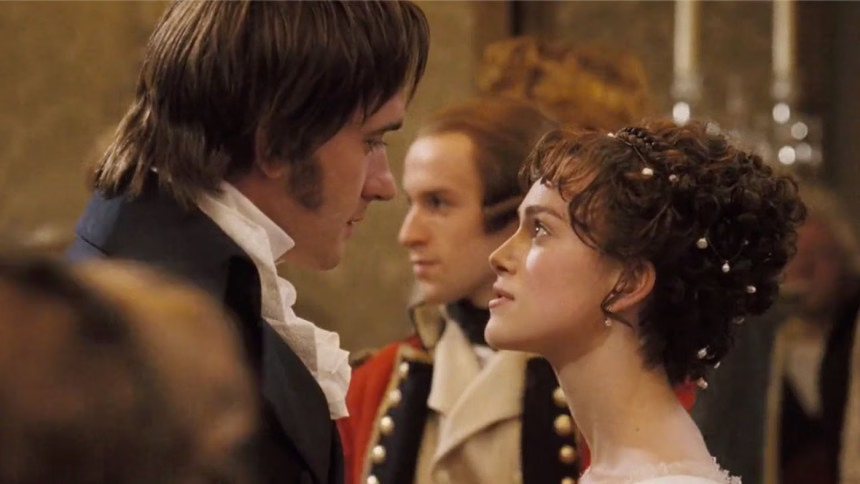
Pride and Prejudice: A Synopsis
Jane Austen’s “Pride and Prejudice” remains the blueprint for the enemies-to-lovers trope, chronicling the spirited Elizabeth Bennet’s tumultuous relationship with the wealthy, aloof Mr. Darcy. Their story begins in dislike and misunderstanding, evolves through self-reflection, and culminates in one of literature’s most cherished unions, proving that first impressions are not always lasting.
A Most Inauspicious Beginning
The foundation of their animosity is laid at the Meryton assembly. Mr. Darcy, new to the neighborhood and uncomfortable in the crowd of strangers, refuses to dance with Elizabeth, declaring her merely “tolerable” and not handsome enough to tempt him. Elizabeth, overhearing the remark, is not wounded but amused, forming an immediate and lasting prejudice against his pride and arrogance. The battle lines are drawn not in malice, but in a clash of wit and social perception.
The Art of Verbal Sparring
Their early interactions are a masterclass in intellectual combat. Elizabeth, armed with sharp wit and a playful spirit, delights in challenging Darcy’s solemnity. He, in turn, finds himself both frustrated and fascinated by the one woman who is not intimidated by his wealth or status. Their conversations are laced with double meanings and subtle barbs, each encounter fueling their mutual fascination and reinforcing their stated dislike.
The Unraveling of Certainty
The pivotal moment arrives with Mr. Darcy’s first, disastrous marriage proposal at the Hunsford parsonage. He confesses his love but couches it in insults about her family’s inferiority. Elizabeth, furious and wounded, delivers a stunning refusal, accusing him of arrogance and cruelty, specifically citing his role in separating her sister Jane from Mr. Bingley and his alleged mistreatment of Mr. Wickham. This confrontation forces both characters to see the other—and themselves—in a new, unforgiving light.
A Letter and a Reckoning
The morning after her refusal, Darcy hands Elizabeth a letter. This document serves as his defense and the story’s turning point. He candidly explains his reasons for interfering between Bingley and Jane, and reveals the truth about Wickham’s deceit and his attempt to elope with Darcy’s young sister, Georgiana. Elizabeth is forced to confront the fact that her “prejudice” has blinded her. She realizes she has been a poor judge of character, marking the beginning of her profound personal transformation.
A Change of Heart
Elizabeth’s tour of Derbyshire with her aunt and uncle brings her to the stunning grounds of Pemberley, Darcy’s estate. Here, she sees a different side of the man she thought she knew. The housekeeper’s unsolicited praise reveals a generous and fair master, and the estate itself reflects his true, responsible character. When Darcy unexpectedly arrives and behaves with gracious, newfound humility towards her and her middle-class relatives, Elizabeth’s remaining prejudice melts away, replaced by a growing respect and attraction.
A Test of Character
The crisis emerges with the news that Elizabeth’s youngest sister, Lydia, has run away with Wickham, threatening the entire Bennet family with social ruin. In her despair, Elizabeth believes all hope of a future with Darcy is lost. Unbeknownst to her, Darcy takes immediate action. He tracks down the couple, uses his own money to force Wickham into marriage, and saves the Bennet family’s honor, asking for no credit. This selfless act, discovered by accident, confirms the depth of his love and his fundamental goodness.
From Enemies to Equal Partners
The final, early morning meeting on the fields of Longbourn is a scene of tender vulnerability. Stripped of their pride and prejudice, they meet as true equals. Darcy confesses that his character has been improved by her earlier reproofs, and Elizabeth admits her own feelings have completely transformed. Their second proposal is not a battle, but a union of two minds who have grown and humbled themselves for love. They become the quintessential lovers, not despite their initial enmity, but because of the profound self-knowledge it forced upon them.