
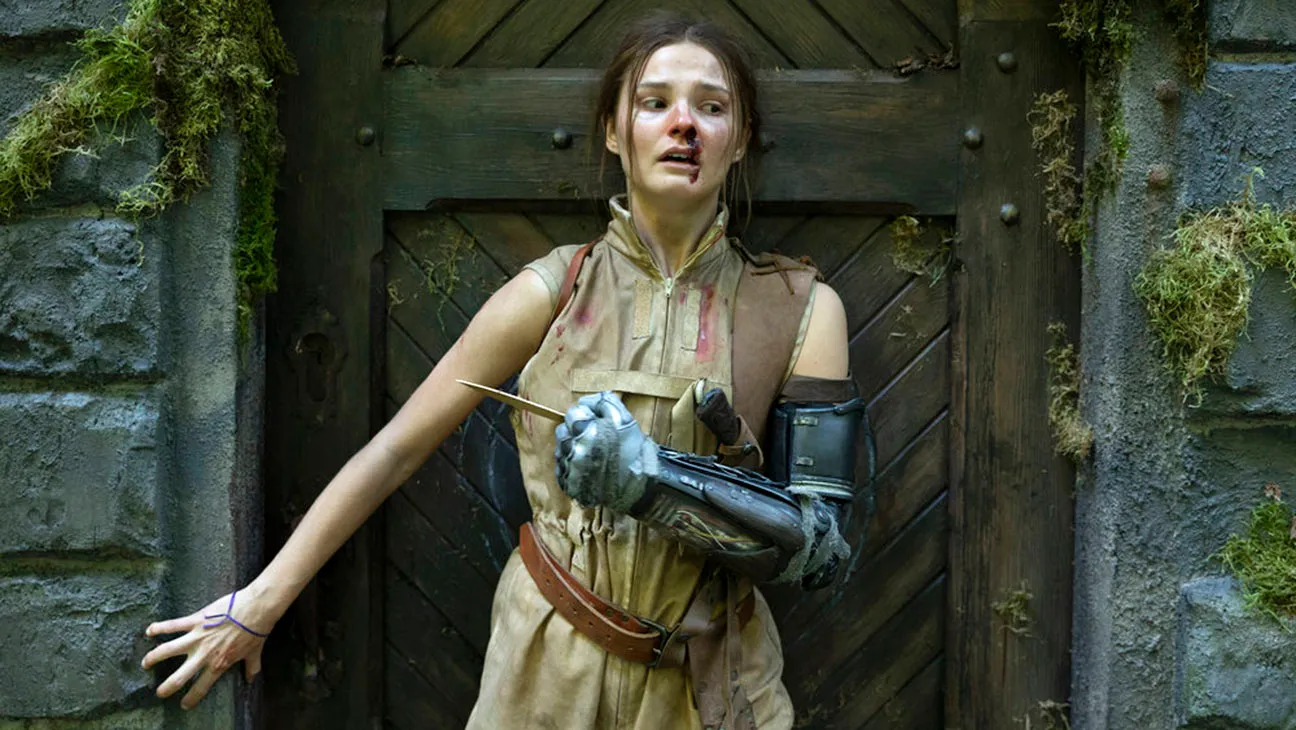
“The House at the Edge of the Woods” is a gothic horror mystery that follows a young writer, Eleanor, who inherits a secluded, decaying family mansion after the sudden death of her reclusive grandmother. Drawn by the need for solitude to work on her novel and a desire to uncover her family’s shrouded history, she moves into the creaking, shadow-filled house, unaware that its walls hold secrets that refuse to stay buried.
An Inheritance of Shadows
Eleanor’s arrival at the house is met with palpable unease. The sprawling Victorian structure stands choked by overgrown woods, its windows like blind eyes. The few locals in the nearby village offer grim warnings and superstitious tales about the “Whispering House,” but Eleanor, a rationalist, dismisses them as folklore. She sees the isolation as the perfect creative retreat, but the house seems to reject her presence from the moment she crosses its threshold.
The Walls Have Secrets
The house itself is a character, alive with sound and memory. Floorboards groan without weight, doors open and close on their own, and a cold draft perpetually flows through the halls, despite sealed windows. Eleanor discovers hidden rooms behind bookcases and a locked attic that seems to be the source of most strange phenomena—faint, rhythmic scratching and the haunting scent of dried roses. Her rational mind begins to fray at the edges.
The Family Curse
While clearing out her grandmother’s belongings, Eleanor unearths a trove of old diaries and letters. They reveal a generations-old pattern of tragedy: first-born children in the family line have either vanished or died under mysterious circumstances on the eve of their 30th birthday. Eleanor, who is weeks away from her own 30th birthday, begins to understand the local warnings were not mere stories, but a grim chronicle of her own bloodline.
A Ghost in the Machine
In an attempt to document the phenomena, Eleanor sets up audio recorders and cameras. The evidence she captures is chilling: Electronic Voice Phenomena (EVP) of a child’s laughter, fleeting shadow figures caught on motion sensors, and a clear, whispered voice on a recording saying, “She’s almost here.” The house is not just haunted; it is actively communicating, and the message is a countdown to her birthday.
The Keeper of the Woods
Her investigation leads her to an old groundskeeper, a man who has lived on the property’s edge for decades. He reveals that the entity in the house is not a single ghost, but a primordial presence tied to the land—a hungry force that the family, generations ago, struck a bargain with for prosperity. The price was a recurring sacrifice, a tradition her grandmother had tried to end, with tragic consequences.
The Night of the Offering
On the night of her 30th birthday, the house’s activity escalates into a full-blown assault. The entity manifests, showing Eleanor visions of her ancestors and their gruesome fates. She realizes that to break the curse, she must not flee, but confront the source in the sealed attic. The final confrontation is not with a monster, but with the dark history of her own family’s choices, and the malevolent energy they invited in.
A New Root to an Old Tree
Eleanor survives the night by not offering fear, but by using the knowledge she gained to symbolically nullify the ancient bargain, using family heirlooms as ritual objects to sever the tie. The film ends ambiguously. The house falls silent, but Eleanor does not leave. She remains, now the true guardian of the house, her first novel completed—a story titled “The House at the Edge of the Woods.” The final shot is of a new sapling she has planted in the garden, a sign that a new, healthier root has taken hold, finally breaking the cycle of shadow and sacrifice.